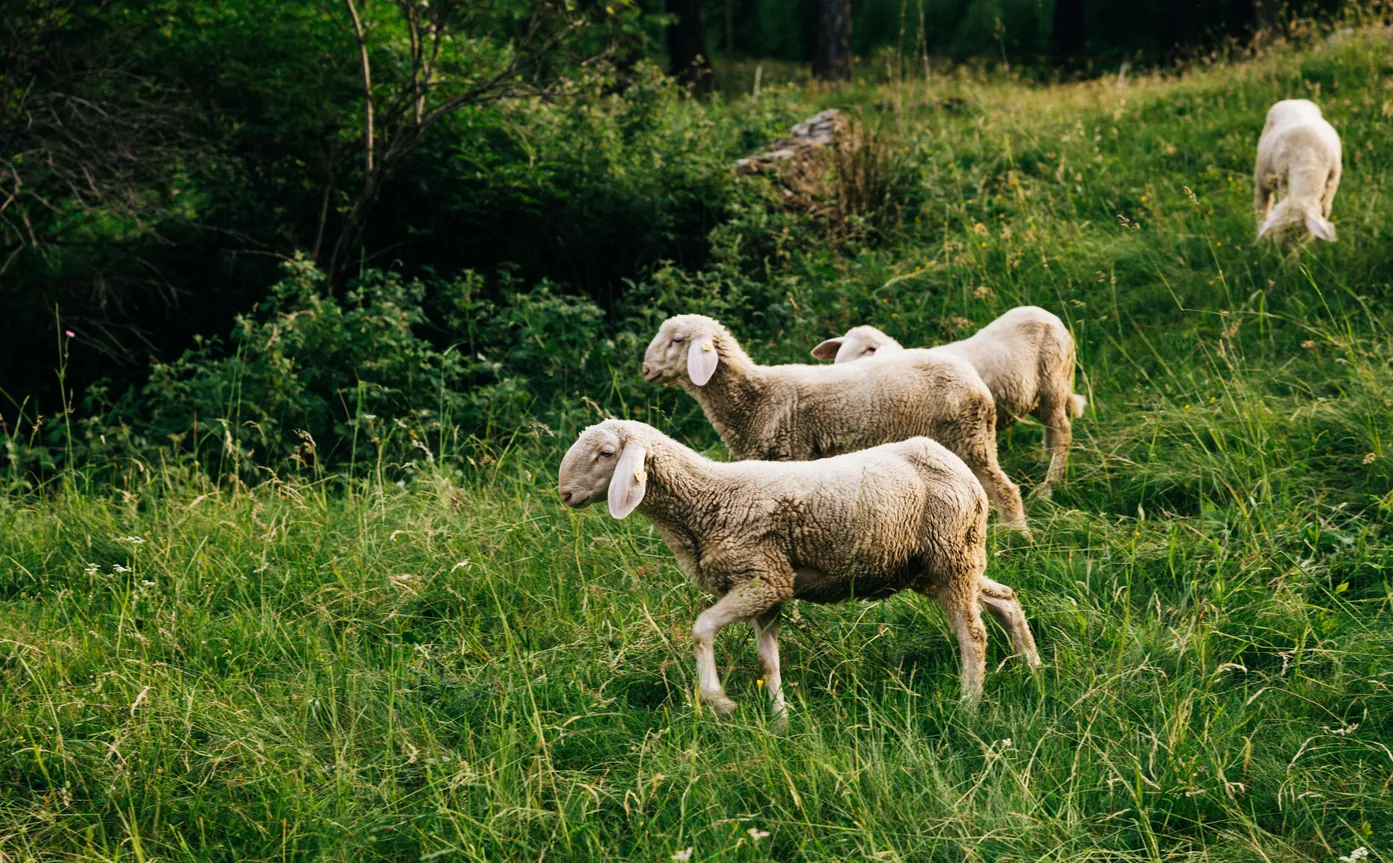
The sheep is Schnals’s heraldic animal. Not officially, but in our hearts. That’s why I’m just a little bit ashamed to admit this: at the Oberraindlhof, we were rather late to the sheep party. But now our love for this cultural treasure on four woolly legs is burning brightly, and that’s what this story is all about.
A sheep for the wedding
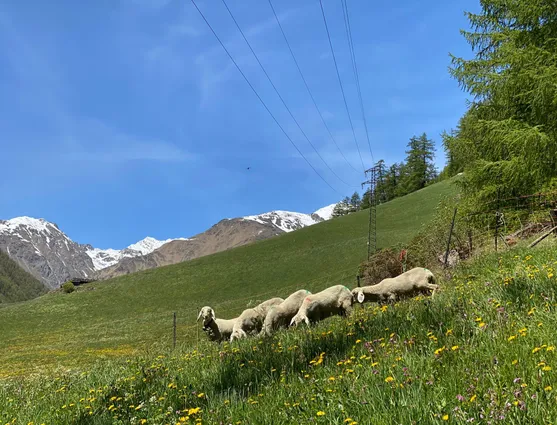
I, this old farmstead, have stood here since 1581, and yet it took a long time before the first sheep moved in with me. Great-grandfather Anton kept goats, cows and chickens; strangely enough, sheep never crossed his mind, even though hardly any other animal has such a long tradition here. Then, in 1986, Helmuth and Elisabeth got married. The neighbour turned up with a present, and this present had four legs, two big eyes and a particularly thick skull. That’s how my farm folk came to have sheep. Today, my sheep graze on the meadows all around. They mow the grass thoroughly – no tractor needed. And when a roast goes into the oven, nobody has to ask where the meat comes from. I reckon: if there’s going to be meat on the plate, then this is the way to do it.
Schöpsernes (a kind of lamp stew), roast lamb and Schnalser noodles
All year round, the traditional Schöpserne, roast lamb and Schnalser noodles with lamb ragout feature on my menu. We could never take these classics off the menu. They’ve become ingrained in my guests’ minds, and my guests have a good memory. On public holidays, the roast is served in a copper pan, and the aroma fills the whole room. Some of the meat goes to my trusted butcher and comes back as lamb salami, which is served on a board at breakfast and is a real delicacy.
The Schnals sheep: an alpine climber with a ram’s nose
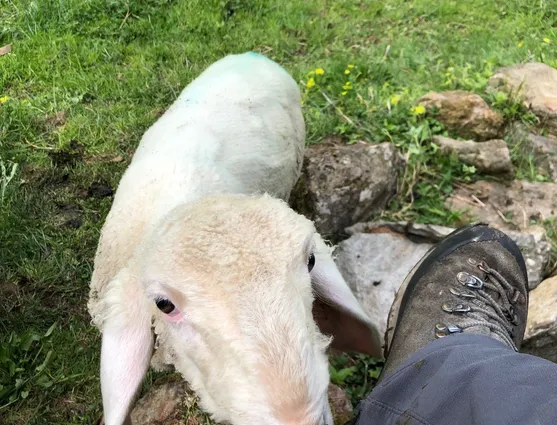
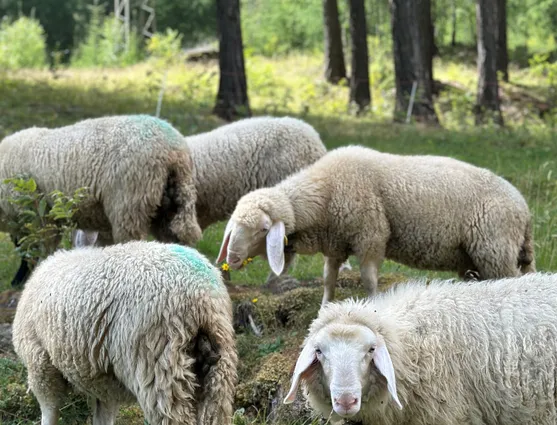
Not all sheep are the same: take a good, close look at one of these Schnals sheep. Its head is round and hornless, its nose strongly curved, and then there are those wrinkles that look like a thinker’s brow. Its fleece is thick and white. And then there are the feet: they’re small, hard and sure-footed. And whilst we’re on the subject of mountain tales: the Iceman, who was found up here, was wearing a loincloth made of sheepskin.
All the things Schnals sheep’s wool can do
Even today, there’s nothing left of a sheep that you couldn’t use. I’ve used the wool in decorative cushions, curtains and placemats, and it was specially made for the Transhumance Room. Down in the dining area and at reception, you’ll find glass coasters, pencil cases, seat cushions and a wine cooler made from wool. In September, when the Speciality Weeks are celebrated throughout the valley, my staff present every guest who orders a lamb dish with a key ring made from Schnals sheep’s wool.
And then there’s the matter of lanolin, the wool wax. When they have a cold, the farmwives place the wool on their chests and swear by it. It stimulates blood circulation, reduces inflammation and eases the pain. I don’t know if science backs this up, but my farm ladies certainly do. Whether it’s wax, wool or meat: the Schnals sheep is a gift from heaven. And thank goodness the neighbour had a better idea back then than a coffee service.